
Mika Biereth
Mika Biereth has become one of the most intriguing young forwards in European football, a player whose journey has taken him from the English academy system to Scotland, Austria, and eventually Ligue 1. As interest in Mika Biereth stats, Mika Biereth Arsenal, and Mika Biereth transfer activity continues to grow, it has become increasingly clear that Biereth is more than just a promising talent—he is a striker whose development trajectory, strengths, weaknesses, and potential ceiling deserve serious analysis. His performances for AS Monaco, particularly in his explosive first half-season, have positioned him as one of Europe’s most watched emerging No. 9s, even as he continues to navigate the natural fluctuations that come with being a young player in a highly competitive environment.
To understand whether Biereth is genuinely on track to become a top European striker, it’s essential to trace his journey from his early days in England to his breakout seasons abroad. Biereth’s story is one of adaptability, perseverance, and technical evolution, shaped by the unique challenges and opportunities presented by each league he has competed in.
Early Career and Development at Fulham
A Prolific Emergence in the Academy Scene
Mika Biereth football foundation was laid in the Fulham academy, where he quickly distinguished himself as a natural goalscorer. His 2020/21 campaign with the Fulham U18s remains one of the most outstanding youth league seasons in recent Premier League academy history. Across 23 league appearances, he produced 22 goals and 13 assists—insane output even by youth standards. What stood out most was not just the volume of his contributions, but the variety: poacher’s finishes, cut-backs, runs in behind, and intelligent layoffs. His ability to combine with teammates while staying consistently dangerous around the box made him one of the hottest attacking prospects of his age group.
Fulham were eager to retain him, but Arsenal saw the opportunity to recruit a young, tactically flexible striker capable of fitting into the possession-based, combination-heavy style that Mikel Arteta was implementing. In the summer of 2021, Biereth made the move, a decision that would give him Premier League exposure but also a unique set of challenges.
Mika Biereth at Arsenal — Potential Without the Pathway
A Highly Regarded Prospect with Limited Senior Opportunities
When Arsenal signed Biereth, they believed they were acquiring a modern centre-forward with a balanced blend of physical presence and technical quality. Within the academy setup, he instantly became one of the most influential forwards at U23 level. His ability to receive in tight spaces, spin defenders, and connect with attacking midfielders made him stand out in Premier League 2, where he regularly contributed goals and assists.
However, the pathway to Arsenal’s first team was far more complicated. Arsenal’s attacking structure demanded a level of back-to-goal strength, aerial reliability, and tactical maturity that young forwards rarely possess immediately. Between Pierre-Emerick Aubameyang, Alexandre Lacazette, Gabriel Jesus, Eddie Nketiah, and later Folarin Balogun, the competition was simply too deep. Even when he impressed in training sessions, there was little room for him to break through into competitive fixtures.
Why the Breakthrough Didn’t Happen
Arsenal insiders noted that while Biereth had excellent movement and technical touch, he needed more physical development to handle elite Premier League centre-backs. He also needed consistent match experience—something impossible in a squad stacked with established strikers. And so, the club’s choice became clear: if Biereth was going to grow, he needed senior football elsewhere. His loan journey began, and it would play a defining role in shaping the forward he is today.
Loan Spells That Reshaped Biereth’s Career
RKC Waalwijk — A Challenging Introduction to Senior Football
Biereth’s first loan to RKC Waalwijk in the Eredivisie during the 2022/23 campaign was not explosive in terms of output, but it was vital for his development. Dutch football offered him a demanding tactical environment where forwards are expected not just to score but also to contribute to build-up play, press structurally, and link wide players with midfielders. Minutes were inconsistent, but when he did play, he showed flashes of the sharp movement and work rate that would later become his trademarks.
The Eredivisie is known for exposing weaknesses as much as revealing strengths, and in Biereth’s case it highlighted areas he needed to improve: physical duelling, aerial contests, and back-to-goal shielding. These are weaknesses that have followed him into later stages of his career, though he has gradually worked on them.
Despite a modest statistical return, the experience toughened him and prepared him for his next—and far more impactful—loan move.
Also Read: Tampa Bay Buccaneers vs Chargers Match Player Stats
Motherwell — The Breakout That Announced Him to Europe
A Transformative Half-Season in the Scottish Premiership
In the first half of the 2023/24 season, Biereth joined Motherwell, a move that was initially met with curiosity rather than excitement. But within weeks, it became clear that this was where everything began to click. Biereth thrived in Scotland’s physically demanding environment, where centre-backs are rugged, duels are constant, and attacking players are forced to think and move quickly.
Across just 15 matches, he recorded 6 goals and 5 assists—a remarkable contribution given Motherwell’s mid-table status. His speed into the channels, timing of runs, and relentless work rate made him a fan favourite. Supporters quickly recognized his intelligence: he wasn’t merely fast or industrious; he made smart decisions, held the ball well in wide areas, and linked play with surprising maturity.
This was the period when scouts across Europe first began to discuss him seriously as a player capable of thriving outside the UK. Motherwell unlocked his confidence, and Arsenal saw his market value rise sharply.
Sturm Graz — The Club That Elevated Him to a New Level
From Mid-Season Loan to Permanent Transfer
In January 2024, Biereth made another strategic move—this time to Sturm Graz in Austria. Unlike his previous loans, this one included a long-term plan. From the moment he arrived, Sturm Graz gave him a consistent role, clear tactical responsibilities, and trust. This combination allowed him to flourish.
He adapted instantly to Austrian football, which blends physical defending with high-tempo attacking transitions. It suited him perfectly. He became a focal point of the attack, contributing goals and assists while refining his pressing and movement. The club quickly recognized his importance and made the deal permanent in the summer of 2024.
Sturm Graz was the bridge that led Biereth to the biggest opportunity of his career so far: the move to AS Monaco.
The AS Monaco Transfer — A Major Turning Point
An Opportunity at the Highest Level of His Career
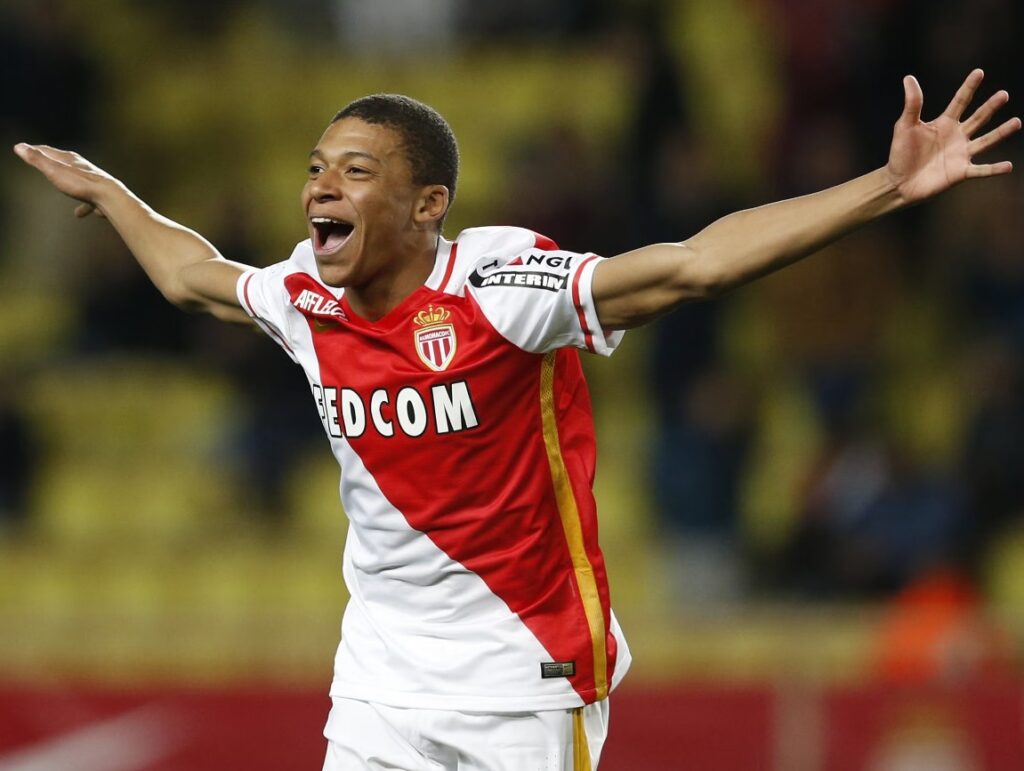
After an impressive spell at Sturm Graz, AS Monaco moved decisively to secure Mika Biereth, seeing him as a striker with both immediate impact potential and long-term upside. Ligue 1 has become a destination for emerging forwards seeking to refine their game in a league that balances physicality with tactical sophistication. For Biereth, it represented the ideal next step: a top-five European league, a club known for developing young talent, and a tactical environment that valued his movement and work rate.
His adaptation to French football was almost instantaneous. Playing under a system that emphasized verticality, combination play, and high pressing, Biereth thrived. He was not just a squad addition; he quickly became one of the league’s standout performers during his first half-season.
A Stunning First Half-Season in Ligue 1
In just nineteen appearances following his January arrival, Biereth scored thirteen goals. Those were not tap-ins from a dominant side; many were the result of intelligent runs, confident finishing, and sharp anticipation. His expected goals (xG) numbers showed an overperformance that spoke to efficiency rather than luck. He consistently found the corners, stayed composed in one-versus-one situations, and demonstrated the same movement intelligence that made him successful at Motherwell and Sturm Graz.
The Ligue 1 defenders he faced were quicker and more physical than those he had encountered previously, yet he handled the challenge with surprising maturity. His understanding of spacing improved, and his pressing intensity matched Monaco’s aggressive style. Analysts across Europe began highlighting him as a breakout figure, and the conversation shifted from whether he could succeed in a top league to how high his ceiling truly was.
Also Read: Chargers vs Texans Match Player Stats Full Breakdown
The 2025/26 Season — A Dip in Form and a New Set of Challenges
Adjusting to Managerial Changes and Increased Competition
As is often the case with young attackers, Biereth’s rise was followed by a period of instability. In the 2025/26 season, Monaco underwent managerial change, and a new tactical structure brought different expectations. Suddenly, the forward line became more competitive, with players like Folarin Balogun also pushing for minutes. Biereth, who had been a guaranteed starter during his first months in France, now had to fight to regain his place.
The goal return reflected this transition. After scoring only once in the opening stage of the season, questions emerged from fans and analysts about whether his initial success had been a temporary burst or a preview of what he could become long-term. In reality, the dip had more to do with changing roles, reduced rhythm, and the natural development curve of a young striker still adjusting to one of Europe’s demanding environments.
A Normal Part of Development Rather Than a Decline
It is tempting to view a dip in form as regression, but in Biereth’s case, it mirrors the path taken by many young forwards. Early success often leads to tactical adjustments by opponents, increased pressure, and the mental challenge of sustaining high performance levels. What separates great strikers from good ones is how they respond. Biereth’s underlying movement remained sharp, his pressing numbers stayed high, and his expected goals remained competitive even when the finishing temporarily faltered.
The key point: the foundation of his game did not disappear. Confidence fluctuates, but movement intelligence, work rate, and technical touch are far more stable indicators of long-term potential, all of which Biereth retains.
Strengths That Define Mika Biereth as a Modern Striker
Exceptional Movement and Spatial Awareness
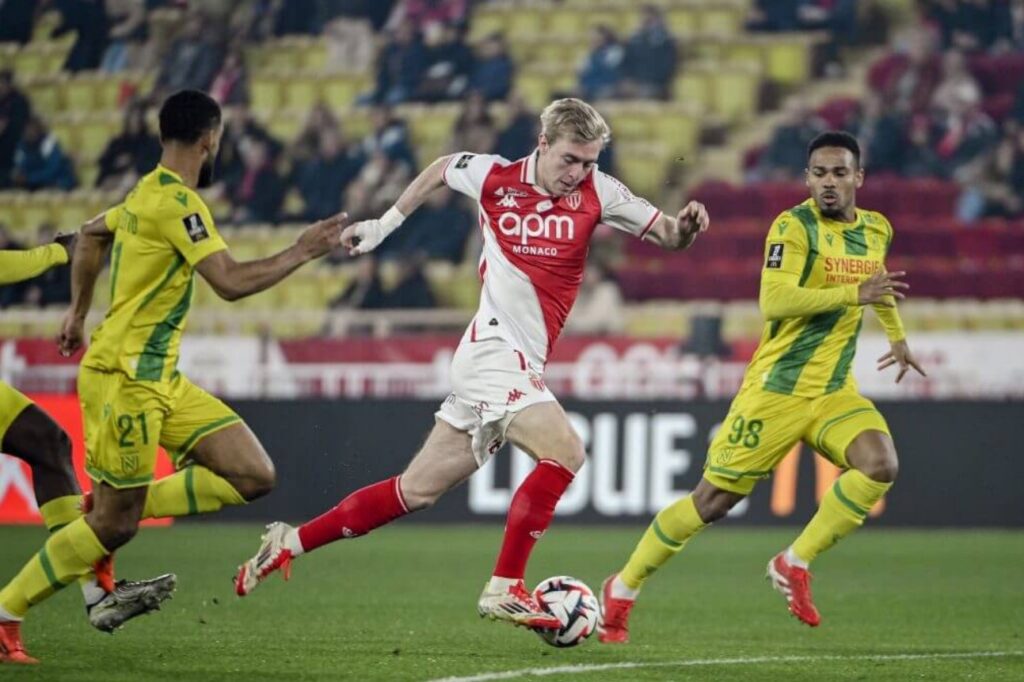
Biereth’s movement is arguably his strongest attribute. He excels at positioning himself between centre-backs, making blindside runs, and using subtle changes of direction to create separation. This makes him particularly dangerous in teams that rely on through balls and vertical progression. His ability to drag defenders out of structure opens space for advanced midfielders and wingers. Even when he is not scoring, he contributes significantly to the team’s attacking geometry.
What is notable is that his movement is not random; it is informed by scanning, timing, and instinctive reading of defensive shapes. Few players his age manipulate back lines with such intelligence.
Also Read: NBABite Reddit Guide Safe Alternatives for NBA Streams
Composed and Efficient Finishing
His finishing style emphasizes calmness and precision. Rather than relying on power, he prefers to guide the ball into the corners, using body shape and foot angle to deceive goalkeepers. This makes him particularly effective in one-on-one situations and in central areas inside the box. His overperformance of xG during his first months in Ligue 1 demonstrated a striker with genuine composure.
Technical Ability and Link-Up Play
One of the most underrated aspects of Biereth’s game is his ability to connect play. His first touch is consistently excellent, allowing him to cushion long passes, control difficult balls, and set up teammates with quick lay-offs. He links effectively in half-spaces, and when he receives in the box, he often prioritizes cut-backs rather than forcing low-quality shots. This unselfishness makes him ideal for teams that emphasize combination play.
Work Rate and Pressing Intelligence
Modern No. 9s must be full participants in the defensive phase, and Biereth embraces this responsibility. He presses with intention, not just effort, blocking passing lanes and triggering pressure at the correct moments. Even if he does not frequently win the ball himself, he disrupts opposition build-up and allows his team to sustain attacks higher up the pitch.
Weaknesses That Still Shape His Ceiling
Aerial Ability Remains a Key Limitation
Despite standing 1.87 meters tall, Biereth has not yet developed into a reliable aerial presence. He often avoids duels against larger centre-backs, and when he does contest them, he wins a relatively low percentage. This weakness limits him in certain tactical systems and makes him less effective against deep defensive blocks that force attackers to rely on crosses.
His heading technique and timing need refinement, not only to score more goals but also to hold up play under pressure.
Back-to-Goal Play Against Strong Defenders
When receiving with his back to goal, Biereth can be dispossessed too easily by physically dominant centre-backs. This is an area that often separates forwards capable of playing in the Premier League or Bundesliga from those who struggle. Developing better core strength, balance, and shielding technique will be essential if he wants to succeed in the most physical leagues.
Consistency Over Long Seasons
Strikers typically mature later than midfielders or wingers. While Biereth has shown he can produce elite-level stretches of form, the challenge is maintaining that level across multiple competitions and months. Consistency will be the final piece that elevates him from promising talent to established star.
Also Read: CrackStreams UFC Risks Safety Tips & Legal Streaming Options
Does Mika Biereth Have What It Takes to Become a Top European Striker?
Evidence Points to a High Potential Ceiling
Biereth’s career so far suggests he possesses the core attributes required to reach the top: intelligent movement, calm finishing, technical link-up play, and elite work rate. These qualities are difficult to teach and often define top-level forwards. His weaknesses—physical duels, aerial play, back-to-goal technique—are more coachable and tend to improve naturally as players hit their physical peak in their mid-twenties.
His experiences across different leagues have also given him a tactical education that few young strikers possess. He has shown resilience, adaptability, and the ability to rise in competitive environments. Given the right coaching and consistent playing time, he has the potential to become one of Europe’s most complete centre-forwards.
Future Outlook — What Comes Next for Mika Biereth?
Opportunities at Monaco and Beyond
The immediate task for Biereth is regaining a consistent starting role at Monaco. The competition with Balogun could actually accelerate his development, pushing him to refine the weakest aspects of his game. Monaco remains one of the best clubs in Europe for developing young attackers, and the environment is still perfectly suited to his strengths.
Long term, a Premier League move remains very possible. Several English clubs have monitored him since his Motherwell days, and his style—particularly his pressing and movement—fits the identity of many mid-to-top table EPL sides. Returning to England would require increased physical resilience, but that is an area where he has shown steady improvement.
National Team Prospects
For Denmark, Biereth represents a future option as the national team transitions toward a younger attacking generation. If he can secure consistent minutes at club level, senior international opportunities are likely to follow.
Conclusion
Mika Biereth career has been anything but linear, but every step—from Fulham to Arsenal, from Scotland to Austria, and now in France—has added layers to his development. He has emerged as a technically gifted, hardworking striker with the intelligence and instinct to score goals at high levels. Though he still has weaknesses in aerial duels and back-to-goal situations, the foundations of a top European forward are already present.
Whether he becomes one of Europe’s best will depend on his ability to refine those weaker areas, maintain confidence during difficult periods, and secure consistent playing time. But the ceiling is undeniably high. As he enters the next phase of his career, Biereth remains one of the most compelling young strikers to watch on the continent.
FAQs
What position does Mika Biereth play?
He is a centre-forward known for his movement, link-up play, and pressing.
What are Mika Biereth key strengths?
His movement, finishing, technical touch, and work rate.
What is his main weakness?
Aerial duels and physical back-to-goal play remain areas for improvement.
Which clubs has he played for?
Fulham (youth), Arsenal, RKC Waalwijk, Motherwell, Sturm Graz, and AS Monaco.
Could he return to the Premier League?
Yes. His profile fits several EPL clubs, and interest has been consistent.
Also Read: Buffalo Bills vs Colts Match Player Stats Full Analysis
About The Author