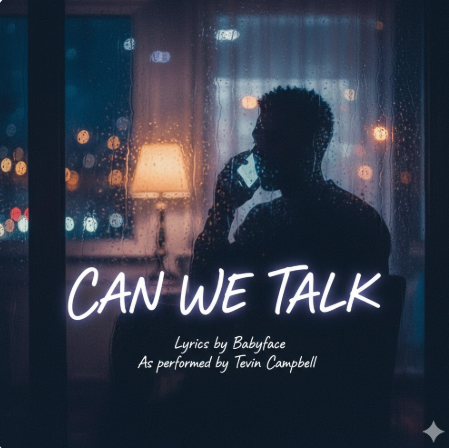
can we talk lyrics
The phrase “can we talk lyrics” continues to attract listeners decades after the song’s original release, a testament to the emotional honesty and universal appeal of this R&B classic. First introduced to the world in 1993 through Tevin Campbell’s album I’m Ready, “Can We Talk” remains one of the most recognizable slow jams in modern music history. Its longevity is not accidental. The song speaks directly to a shared human experience: the anxiety, hope, and vulnerability that come with wanting to connect romantically with someone but not knowing how to begin.
Unlike many love songs that rely on grand gestures or dramatic declarations, “Can We Talk” thrives on restraint. Its power lies in simplicity, sincerity, and emotional realism. The lyrics are not about conquering love; they are about asking permission to be heard. That subtle emotional framing is one of the main reasons people continue searching for the meaning behind the can we talk lyrics, even decades later.
This article offers a comprehensive, human-first exploration of the song’s lyrical meaning, musical composition, cultural context, and lasting influence. Drawing from musical history, lyrical analysis, and R&B scholarship, it explains why “Can We Talk” remains relevant in an era far removed from its original release.
Also Read: Maria Burton Carson: Her Life, Legacy, and Family
The Origins of “Can We Talk” and Its Place in 1990s R&B
To understand the emotional weight of the can we talk lyrics, it helps to place the song within the broader context of early 1990s R&B. This period marked a transition from the polished soul of the 1980s to a more emotionally expressive, confessional style of songwriting. Artists were increasingly focused on vulnerability, introspection, and storytelling rather than vocal theatrics alone.
“Can We Talk” was written by Babyface, Denis Lamont, and Darryl Simmons, all of whom played pivotal roles in shaping the sound of modern R&B. Babyface, in particular, was known for writing songs that balanced emotional accessibility with lyrical sophistication. His fingerprints are evident throughout the song, especially in its conversational tone and emotional pacing.
Tevin Campbell, still a teenager at the time, brought a unique sincerity to the performance. His youthful voice added credibility to the song’s theme of romantic uncertainty. Rather than sounding rehearsed or calculated, the lyrics feel lived-in, as if the singer is genuinely grappling with his emotions in real time.
A Narrative of Vulnerability and Emotional Risk
At its core, the can we talk lyrics tell a simple story: someone has admired another person from afar and is finally working up the courage to initiate a deeper conversation. However, beneath this straightforward premise lies a complex emotional narrative about fear, longing, and self-doubt.
The opening lines establish the internal struggle immediately. The narrator admits to watching the person for a long time without saying a word. This detail is crucial because it reflects a universal emotional experience. Many people recognize the feeling of wanting to speak but being held back by fear of rejection or misunderstanding. The lyrics do not romanticize confidence; instead, they validate hesitation.
As the song progresses, the lyrics shift from observation to intention. The repeated question, “Can we talk for a minute?” becomes both literal and symbolic. On the surface, it is a request for conversation. On a deeper level, it represents the desire for emotional access and mutual vulnerability. The narrator is not asking for love outright; he is asking for the opportunity to express his feelings honestly.
This emotional realism is one reason the song continues to resonate across generations. Even in a digital age where communication is instant, the emotional challenge of expressing genuine feelings remains unchanged.
Also Read: Decarlo Griner: Height, Age, Wedding, and Family Facts
The Emotional Honesty Behind the Lyrics
One of the defining characteristics of the can we talk lyrics is their emotional transparency. There is no posturing or bravado. The narrator openly admits uncertainty, nervousness, and hope, all within the same breath. This balance of emotions makes the song relatable without feeling melodramatic.
The lyrics also avoid explicit promises or exaggerated metaphors. Instead, they rely on plain language and conversational phrasing. This stylistic choice reinforces the authenticity of the message. It feels like a real conversation rather than a scripted performance.
Importantly, the song never guarantees a happy ending. The narrator expresses a desire to talk and to see where things might go, but there is no assumption of success. That openness to possibility, rather than certainty, aligns closely with real-life romantic experiences and contributes to the song’s enduring appeal.
Musical Composition and Its Role in Enhancing the Lyrics
While the lyrics carry the emotional core of the song, the music plays an equally important role in shaping its impact. The arrangement is deliberately understated, allowing the vocals and words to take center stage. Soft keyboards, gentle percussion, and smooth chord progressions create a sonic environment that mirrors the emotional vulnerability expressed in the lyrics.
The tempo is slow but not stagnant, maintaining a steady emotional momentum that keeps the listener engaged. This pacing gives the lyrics room to breathe, ensuring that each line lands with clarity and intention. The melody rises and falls in a way that complements the emotional arc of the song, particularly during the chorus, where the plea for conversation becomes more urgent.
Tevin Campbell’s vocal delivery deserves special attention. His performance strikes a delicate balance between technical control and emotional expressiveness. He never oversings the lyrics, which helps preserve their sincerity. This restraint reinforces the song’s central theme: genuine connection over grand performance.
Also Read: Timothy Shamaly: Actor, Movies, and His Role in Wonka
Cultural Impact and Long-Term Popularity
The lasting popularity of the can we talk lyrics cannot be explained by nostalgia alone. While the song is undeniably associated with the 1990s, it continues to find new audiences through streaming platforms, social media, and pop culture references.
“Can We Talk” has been sampled, covered, and referenced by numerous artists across genres. Its inclusion in films, television shows, and viral videos has introduced it to younger listeners who may not have been alive at the time of its release. These rediscoveries often lead listeners to search for the lyrics and their meaning, contributing to the song’s continued relevance in search trends.
The song’s themes also transcend cultural and generational boundaries. The emotional challenge of initiating honest communication is not tied to a specific era. Whether through handwritten letters, phone calls, or text messages, the desire to be understood remains constant.
Why “Can We Talk” Still Resonates Today
In an age dominated by fast-paced digital communication, the can we talk lyrics feel almost radical in their simplicity. The song emphasizes patience, thoughtfulness, and emotional courage, qualities that are increasingly rare in modern romantic narratives.
The lyrics remind listeners that meaningful connections often begin with small, vulnerable steps rather than dramatic declarations. This message resonates strongly in a world where superficial interactions are common, but genuine emotional intimacy can feel elusive.
Additionally, the song’s lack of cynicism sets it apart. It approaches romance with hope rather than defensiveness, offering an alternative to more guarded or ironic portrayals of love. This sincerity is a key reason the song continues to be shared, discussed, and analyzed decades after its release.
Also Read: Claudie Blakley: A Talented English Actress in Film and TV
Lyrical Themes and Symbolism
Although the lyrics appear straightforward, they contain subtle symbolic elements that deepen their meaning. The act of “talking” functions as a metaphor for emotional openness and mutual recognition. It is not just about conversation but about being seen and understood.
Time also plays an important role in the lyrics. References to watching, waiting, and building courage suggest an internal timeline shaped by emotional readiness rather than external pressure. This emphasis on emotional timing reinforces the song’s realism and relatability.
The repeated structure of the chorus mirrors the narrator’s internal dialogue. By returning to the same question, the song captures the cyclical nature of hesitation and hope that often accompanies romantic uncertainty.
Influence on Modern R&B and Songwriting
The success of “Can We Talk” helped establish a template for emotionally honest R&B songwriting that continues to influence artists today. Many contemporary R&B songs prioritize vulnerability and conversational lyrics, a stylistic lineage that can be traced back to songs like this one.
Artists such as Usher, H.E.R., and Giveon have embraced similar themes of emotional transparency and restrained production. While the sound has evolved, the core principle remains the same: authentic emotion resonates more deeply than polished perfection.
The can we talk lyrics also serve as a reminder that powerful songwriting does not require complex language or elaborate metaphors. Sometimes, the most effective lyrics are those that speak plainly and truthfully.
Also Read: Natalie Portman Star Wars: How Padmé Amidala Shaped a Generation
Frequently Asked Questions About Can We Talk Lyrics
Many listeners wonder whether “Can We Talk” is based on a true story. While the songwriters have not confirmed a specific real-life event, its emotional realism suggests it was inspired by common romantic experiences rather than a single narrative.
Another common question is why the song feels so timeless. The answer lies in its universal theme and restrained production. By avoiding trends and focusing on emotional truth, the song remains relevant regardless of changing musical styles.
Listeners also often ask why the lyrics feel so personal despite their simplicity. This effect comes from the conversational tone and the vulnerability embedded in the narrator’s voice. The song invites listeners to project their own experiences onto the lyrics, making them feel personally addressed.
Conclusion: The Enduring Power of Can We Talk Lyrics
The continued popularity of can we talk lyrics is not a coincidence. The song endures because it captures a moment of emotional honesty that transcends time, genre, and technology. Its success lies in its willingness to embrace vulnerability without embarrassment and hope without certainty.
By combining sincere lyrics, thoughtful composition, and an unforgettable vocal performance, “Can We Talk” has earned its place as one of R&B’s most beloved classics. For listeners old and new, the song remains a reminder that sometimes the most meaningful connections begin with a simple question and the courage to ask it.
About The Author