Ghost Energy Drink
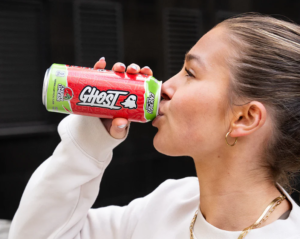
Ghost Energy Drink has become one of the most talked-about names in the modern energy drink market, and it is easy to see why. The brand has built its identity around bold flavor collaborations, transparent branding, zero sugar positioning, and a lifestyle-first image that stands out in a crowded category. On its official energy page, GHOST describes the product with phrases like “legendary energy,” “epic focus,” “zero sugar,” and “no artificial colors,” while the parent brand also emphasizes the “be seen” identity behind its name and visual presence.
That growing attention has led many consumers to ask the same practical questions before they buy a can: What are the best Ghost Energy Drink flavors? What are the key Ghost Energy Drink ingredients? How much caffeine is in a Ghost Energy Drink? What do the Ghost Energy Drink nutrition facts actually look like? And perhaps the biggest question of all: is Ghost Energy Drink healthy?
This guide answers those questions in plain language. Rather than relying on hype, it looks at the product through the lens of ingredients, caffeine content, nutrition positioning, flavor strategy, and real-world use. If you are comparing energy drinks, trying to manage your caffeine intake, or simply curious about the Ghost Energy Drink logo and brand identity, this long-form breakdown gives you the context you need.
What Is Ghost Energy Drink?
Ghost Energy Drink is a sugar-free energy beverage line sold under the GHOST brand.
One reason the product has earned so much attention is that GHOST has managed to blend supplement-industry branding with convenience-store appeal. Many energy drinks market themselves mainly around stimulation. Ghost Energy Drink markets stimulation plus identity. The design language, can art, and the Ghost Energy Drink logo all contribute to that appeal. On the brand’s official site, GHOST explains that the name and “be seen” mantra are tied to the feeling of being overlooked and choosing to stand out anyway. That gives the product a clearer emotional brand story than many rival energy drinks.
From an SEO perspective, that matters because people are not just searching for “ghost energy drink caffeine content.” They are also searching for flavor rankings, brand comparisons, and even aesthetic topics like the Ghost Energy Drink logo. In other words, this is a product people consume and talk about as part of a broader lifestyle.
Ghost Energy Drink Flavors: Why They Stand Out
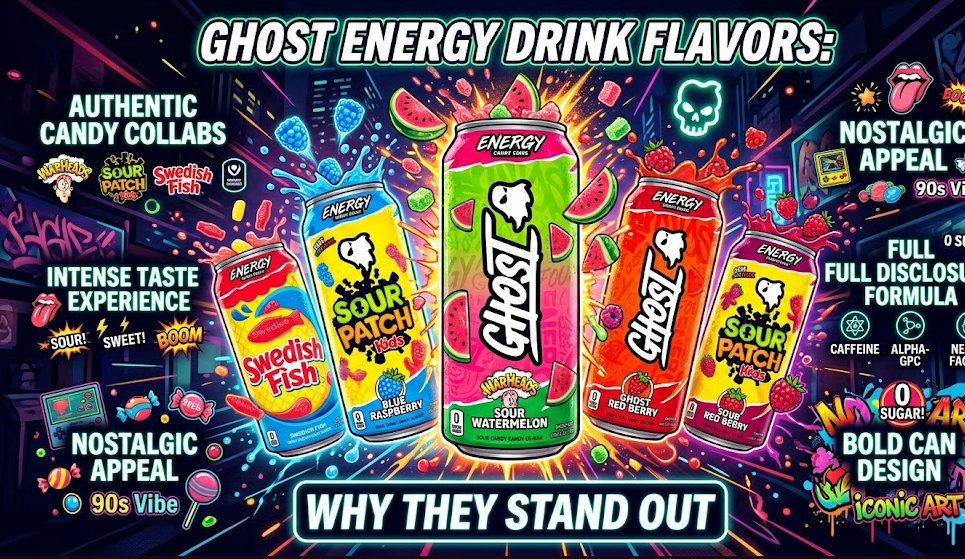
One of the biggest reasons Ghost Energy Drink has built a loyal following is its flavor strategy. The brand leans heavily into nostalgic, candy-inspired, and collaboration-based flavors rather than generic options like “regular,” “citrus,” or “berry blast.” Current official and retail listings show flavors such as Orange Cream, Sour Pink Lemonade, Welch’s Grape, Cherry Limeade, Sour Green Apple, and Bubblicious Strawberry Splash, among others.
What makes these flavors different is not just the names. The brand is clearly trying to recreate highly recognizable taste memories. Orange Cream aims for a dessert-like creamsicle profile. Welch’s Grape leans into a candy-juice hybrid sensation. Sour Pink Lemonade and Sour Green Apple target drinkers who want sharper acidity and a more intense finish. Bubblicious Strawberry Splash is built around novelty and nostalgia.
Consumers may tolerate an average ingredient panel once, but they come back for flavors they actively crave. This is especially important in the zero-sugar segment, where some brands still struggle with artificial aftertaste. GHOST’s emphasis on “authentic flavors” is not just a slogan; it is central to how the product competes.
If you are choosing your first can, the flavor question matters more than people think. The best Ghost Energy Drink flavor is ultimately personal, but the larger takeaway is that the brand has made flavor variety one of its strongest selling points.
Also Read:- Bloom Energy Drink: A Comprehensive Guide to Ingredients, Caffeine, and Health Benefits
Ghost Energy Drink Ingredients: What Is Actually Inside?
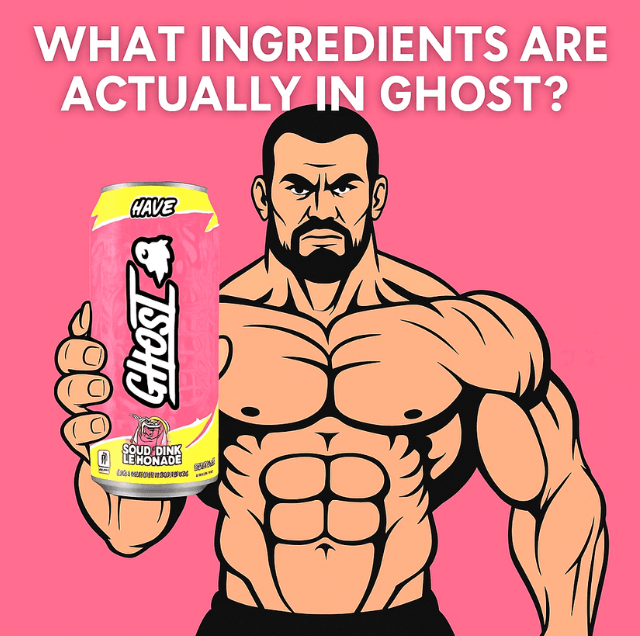
When people search for Ghost Energy Drink ingredients, they usually want more than a label copy summary. They want to know what the product is built to do.
Kroger listings also show ingredients such as sucralose, acesulfame potassium, niacinamide, pyridoxal-5-phosphate, methylcobalamin, sodium benzoate, and potassium sorbate.
Here is how those Ghost Energy Drink ingredients are generally understood:
Natural caffeine from coffee bean
This is the main stimulant in the formula. It is the ingredient most responsible for the energy effect people feel after drinking a can. GHOST and retailer listings specifically emphasize “natural caffeine” sourced from coffee beans.
Taurine
Taurine is a common ingredient in energy drinks. It is an amino sulfonic acid that has been widely used in the category for years. FDA GRAS documentation references taurine use in caffeinated energy drinks and cites Health Canada’s maximum daily limit of 3,000 mg taurine in those products, which gives some broader context for how established taurine is in the market.
Carnipure L-carnitine L-tartrate
This branded form of carnitine is often associated with energy metabolism and exercise-oriented products. Its inclusion helps Ghost Energy Drink feel closer to a sports nutrition crossover beverage rather than just a standard canned stimulant.
Alpha-GPC
Alpha-GPC is commonly discussed in relation to focus and cognitive performance. In an energy drink context, it is often marketed as part of the “focus” side of the formula rather than the pure stimulation side.
NeuroFactor coffee fruit extract
This ingredient is often used in nootropic-style formulations. Its presence reinforces GHOST’s attempt to position the drink as more than caffeine and carbonation.
Taken together, these ingredients show why Ghost Energy Drink appeals to consumers who want a more “supplement-inspired” can. Whether each ingredient produces a meaningful effect in day-to-day use can vary by person, but the formula is clearly designed to look more sophisticated than a basic caffeinated soda.
Also Read:- Pink Drink: The Complete Guide to Starbucks & Homemade Recipes, Benefits, and More
Ghost Energy Drink Caffeine: How Much Caffeine Is in a Ghost Energy Drink?
This is the question most people ask first, and for good reason.
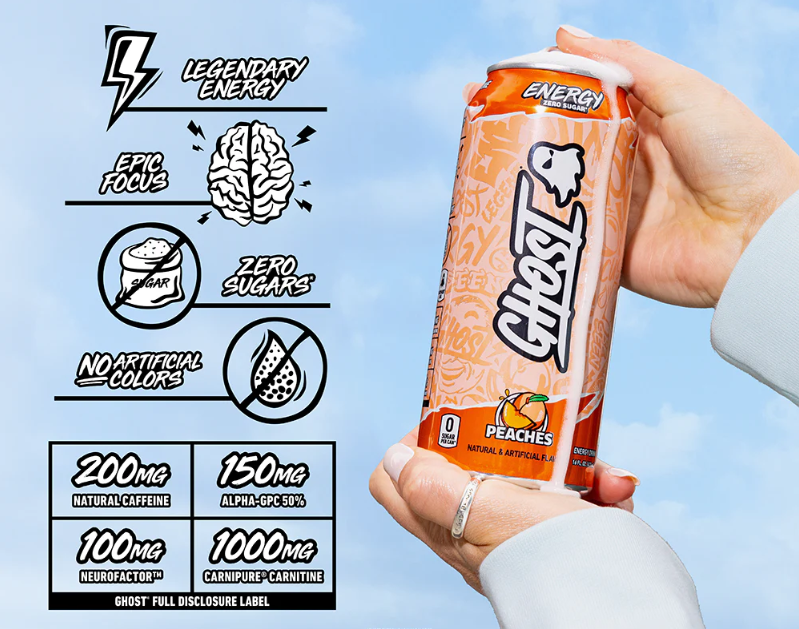
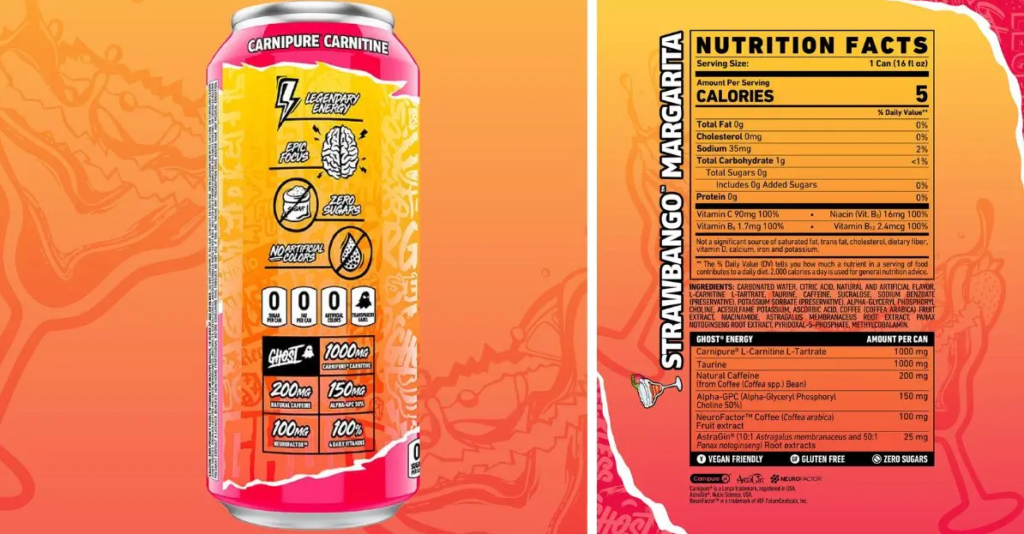
Current product and retail listings consistently show that a standard 16-ounce Ghost Energy Drink contains 200 mg of caffeine. That figure appears across Amazon, Walmart, and other retailer listings for flavors such as Orange Cream and Sour Pink Lemonade.
So if you are asking, how much caffeine is in a Ghost Energy Drink? the practical answer for the regular 16-ounce cans is 200 mg.
There also appears to be a smaller 8.4-ounce Original flavor multipack listing showing 100 mg of natural caffeine per can, which suggests caffeine content can vary by format. That is important because many people assume every can under a brand carries the same stimulant load.
Also Read:- Beatbox Drink: The Ultimate Guide to Flavors, Price, Alcohol Content & More
Ghost Energy Drink Nutrition Facts: What You Should Know
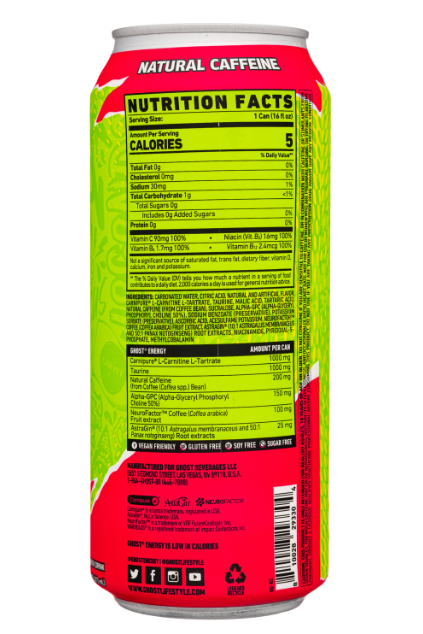
When people look up Ghost Energy Drink nutrition facts, they usually want the short version: is it loaded with sugar, calories, and hidden junk?
The strongest nutrition-related brand claims currently visible on official and major retailer pages are that Ghost Energy Drink is zero sugar and has no artificial colors. Retail listings also describe the drink as vegan and gluten-free in several cases.
That said, “zero sugar” does not mean “ingredient-free.” Ghost Energy Drink nutrition facts and ingredient lists still include sweeteners such as sucralose and acesulfame potassium in some retailer listings, along with preservatives and acids commonly found in shelf-stable beverages.
So the honest reading is this: Ghost Energy Drink is nutritionally leaner than a sugar-loaded energy drink, but it is still a processed functional beverage. That distinction is where a lot of online discussion gets muddled. Some people treat zero-sugar drinks as inherently healthy, while others treat them as automatically unhealthy. The reality is more nuanced.
Also Read:- Shirley Temple Drink Recipe, History & Dirty Shirley Guide
Is Ghost Energy Drink Healthy?
This is the part that deserves a careful answer.
Ghost Energy Drink can be a reasonable choice for some adults in some situations, but it should not be described as universally healthy. The healthier-than-what question matters here.
Compared with a high-sugar energy drink, Ghost Energy Drink may be a better fit for people trying to avoid added sugars. Its zero-sugar positioning is a meaningful advantage in that comparison. Compared with a glass of water, unsweetened coffee, or a full-food snack for energy, it is obviously a more processed option.
Whether Ghost Energy Drink is healthy depends on several factors:
Your overall caffeine intake
At 200 mg per 16-ounce can, Ghost Energy Drink caffeine content is substantial. If this is your only major caffeine source for the day, many healthy adults may tolerate it well. If you also use coffee, pre-workout, or multiple caffeinated sodas, the total can climb quickly. FDA guidance of 400 mg per day for most adults is useful context, but it is not a target everyone should try to hit.
Your sensitivity to stimulants
Some people can drink 200 mg of caffeine and feel focused. Others feel anxious, shaky, or get sleep disruption. A product can be normal for the category and still be a poor fit for your body.
Your perspective on sweeteners and processed beverages
Some consumers are comfortable with zero-sugar sweetened beverages; others prefer to limit them. Ghost Energy Drink is not unusual in this regard, but it does sit firmly in the processed beverage category.
Also Read:- Vodka Drink: The Ultimate Guide to Recipes, Ideas, and the Best Mixes
Ghost Energy Drink Logo and Brand Identity
The Ghost Energy Drink logo gets searched more often than many people would expect, and that says something about the brand. GHOST has built a visual identity that is clean, recognizable, and tightly linked to its broader supplement and lifestyle ecosystem.
That message fits the drink’s packaging and marketing. The Ghost Energy Drink logo is not just decoration; it reinforces the product’s aspirational, youth-oriented, highly social-media-friendly appeal. In consumer packaged goods, design can influence trial nearly as much as formulation. In this category especially, people often buy with their eyes first.
Also Read:- John Daly Drink: The Complete Guide to the Famous Cocktail, Recipe, and Brand
How Ghost Energy Drink Compares to Other Energy Drinks
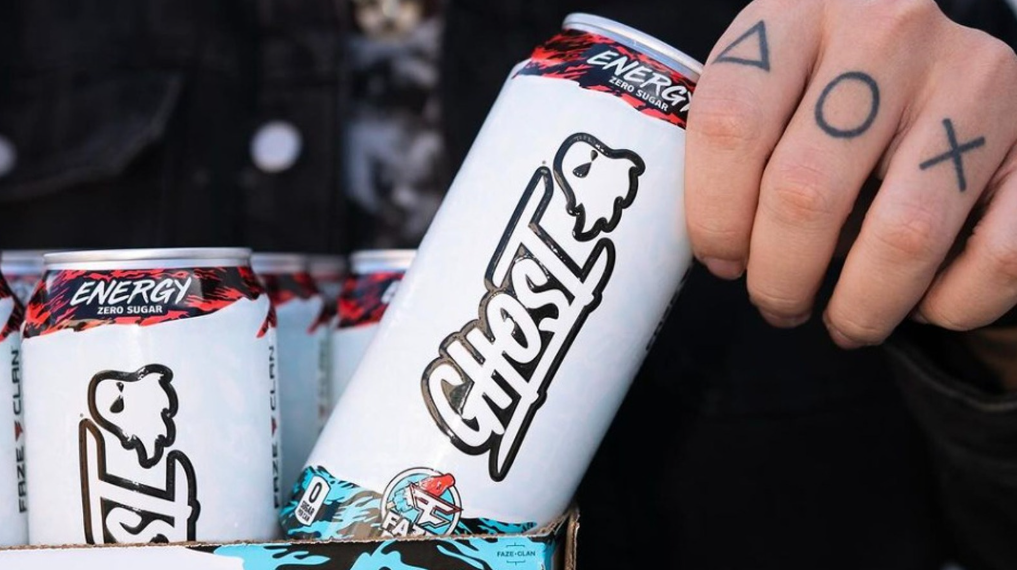
Ghost Energy Drink sits in an interesting middle ground.
It is more formula-forward and lifestyle-driven than traditional legacy brands that built their market on extreme sports and mass retail ubiquity. At the same time, it is more playful and flavor-collaboration-heavy than “clean energy” brands that emphasize minimalist wellness messaging.
Its major strengths are easy to identify. First, the flavor lineup is distinctive. Second, the zero-sugar format appeals to modern consumers trying to reduce sugar intake. Third, the ingredient panel looks more premium than a bare-bones stimulant drink. Fourth, the 200 mg caffeine level is strong enough for many users without reaching the highest end of the category range mentioned by the FDA.
Its limitations are just as important. The product is still a highly processed canned beverage. The ingredient story may sound advanced, but many users are still mainly paying for the combined effect of caffeine, taste, branding, and convenience. And while 200 mg works well for some, it may be too much for caffeine-sensitive consumers.
Also Read:- Greyhound Drink: The Complete Guide to Recipe, Ingredients, and Variations
Who Should Try Ghost Energy Drink?
Ghost Energy Drink may be a good fit for adults who want a zero-sugar energy drink, like bold and candy-inspired flavors, and are comfortable with a 200 mg caffeine serving. It also fits shoppers who appreciate more transparent and “loaded” formulas than old-school energy drinks typically offer.
It may be a poor fit for teenagers, people highly sensitive to caffeine, anyone trying to cut stimulant use, or anyone who already consumes multiple high-caffeine products each day. Retail listings also note that it is intended for adults 18 years or older.
Conclusion
Ghost Energy Drink has earned its popularity by doing several things very well at once. It offers strong flavor variety, a modern zero-sugar positioning, a recognizable formula built around caffeine plus functional add-ins, and branding that feels more lifestyle-focused than generic. For most standard 16-ounce cans, the Ghost Energy Drink caffeine content is 200 mg, which is enough to feel significant for many adults but still within the broader range the FDA reports for energy drinks.
So, is Ghost Energy Drink healthy? The most honest answer is that it can be a smarter choice than many sugary energy drinks, but it is still best treated as a functional stimulant beverage rather than a wellness product. Used thoughtfully and within your overall caffeine limits, it may fit well into an adult lifestyle. Used carelessly or in excess, it can create the same problems associated with other high-caffeine drinks.
FAQs
How much caffeine is in a Ghost Energy Drink?
Most standard 16-ounce Ghost Energy Drink cans currently list 200 mg of caffeine. There are also some smaller-format listings showing 100 mg per can, so the exact amount can depend on the product version.
What are the most popular Ghost Energy Drink flavors?
Widely listed and commonly discussed options include Orange Cream, Sour Pink Lemonade, Welch’s Grape, Cherry Limeade, Sour Green Apple, and Bubblicious Strawberry Splash.
What are the main Ghost Energy Drink ingredients?
Commonly listed functional ingredients include natural caffeine from coffee bean, taurine, Carnipure L-carnitine L-tartrate, Alpha-GPC, NeuroFactor coffee fruit extract, and AstraGin.
Is Ghost Energy Drink healthy?
It can be a lower-sugar alternative to traditional sugary energy drinks, but it is still a processed caffeinated beverage. Whether it is a good fit depends on your caffeine tolerance, overall diet, and how often you drink it.
What does the Ghost Energy Drink logo represent?
The logo ties into the broader GHOST brand identity. According to the company, the name and “be seen” mantra reflect the idea of no longer being overlooked.
For More UpdateS Visit: Supreme Magazine
About The Author