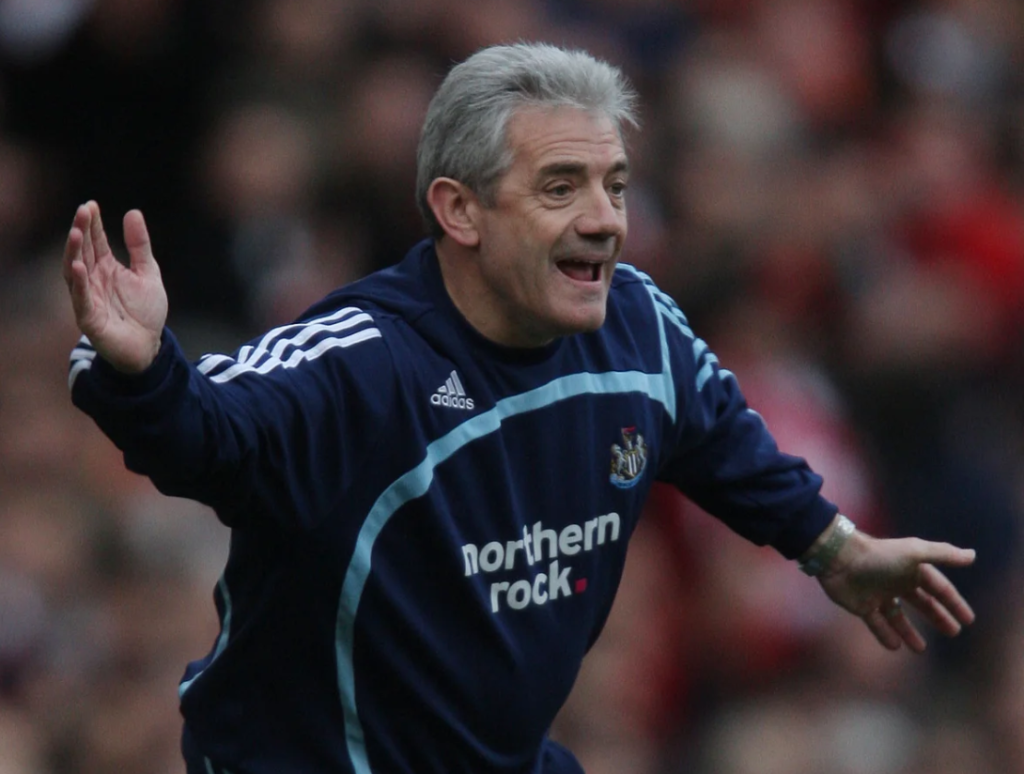
Kevin Keegan
Kevin Keegan was born in 1951 in Armthorpe, a mining village in South Yorkshire, where football was less a pastime and more a way of life, shaping his early identity and ambition. Growing up in a working-class family, he developed a strong sense of discipline and resilience that would later define his playing career, spending countless hours playing school and local football where his energy and determination stood out far more than refined technique. His professional journey began when he joined Scunthorpe United in 1968, starting out as a hardworking midfielder before gradually evolving into a forward, a transition that unlocked his natural ability to press defenders, make intelligent runs, and finish chances with increasing confidence, eventually catching the attention of top English clubs and setting the stage for his move to Liverpool, where his rise to football stardom truly began.
Breakthrough at Liverpool FC
When Kevin Keegan joined Liverpool FC in 1971, he entered a team already built on strong foundations under Bill Shankly, but he quickly proved he was more than just another signing by adapting to the intensity and demands of top-flight English football. In his early months, he worked hard to adjust his positioning and timing, gradually transforming from a promising forward into a key attacking threat, known for his tireless pressing, sharp movement off the ball, and ability to link play effectively with teammates. As he grew into his role, he became an essential part of Liverpool’s attacking system, forming a highly effective partnership with John Toshack that combined physical presence with intelligent forward play, making Liverpool one of the most difficult teams to defend against in England.
As his influence increased, Keegan played a central role in Liverpool’s domestic and European success throughout the 1970s, contributing goals and leadership during crucial matches that helped the club secure major trophies including league titles, FA Cups, and European silverware. His performances in high-stakes games showcased his mental strength and consistency, earning him recognition as one of the most complete forwards in Europe during that period. By the time he left Liverpool in 1977, Kevin Keegan had not only established himself as a fan favorite but had also developed into a world-class footballer ready for a new challenge on the international stage.
European Stardom and Ballon d’Or Success
After leaving Liverpool, Kevin Keegan joined Hamburger SV in Germany, a move that surprised many English fans but ultimately elevated his reputation to an entirely new level on the European stage. In the Bundesliga, he faced a different style of football that demanded technical intelligence and adaptability, and he responded by refining his game, becoming more efficient in possession while maintaining his trademark work rate and attacking instinct. His impact was immediate, helping Hamburg compete at the top of German football and establishing himself as one of the most influential foreign players in the league, earning widespread respect from fans, teammates, and opponents alike.
Hamburg Years and International Fame
During his time at Hamburger SV, Kevin Keegan became one of the most recognizable figures in European football, leading the club through a highly competitive era in the Bundesliga where physical intensity and tactical discipline were essential. He adapted quickly to German football culture, improving his technical efficiency and game intelligence while continuing to rely on his relentless movement and attacking instincts. His presence helped Hamburg challenge for major honors, and he became a central figure in their rise as a dominant force in domestic and European competitions, earning admiration for his professionalism and consistency.
England National Team Leadership
Kevin Keegan played an important role for the England national team during the 1970s and early 1980s, representing his country with determination and consistency across multiple international tournaments. He earned over 40 caps and often served as captain, where his leadership style was defined by energy, encouragement, and leading through example rather than vocal dominance. Despite England not achieving major tournament success during his international career, Keegan remained a reliable figure who brought experience from club football at Liverpool and Hamburg into the national setup, helping stabilize the team during transitional periods.
One of the most significant aspects of his England career was his participation in the FIFA World Cup tournaments of 1974 and 1982, where he played while carrying high expectations as one of the nation’s leading forwards. Although injuries and team inconsistency limited his impact in key moments, his commitment to representing England never wavered, and he remained a respected leader within the squad. Kevin Keegan’s international career is often remembered not for trophies but for his professionalism, influence, and the respect he commanded from teammates and fans alike.
Managerial Career and Newcastle Revolution
After retiring as a player, Kevin Keegan moved into management, where he quickly built a reputation for his emotional leadership style and ability to inspire teams beyond their perceived limits. His early managerial roles included Fulham and Manchester City, but it was at Newcastle United in the 1990s where he achieved iconic status. Taking charge of a club struggling with inconsistency, Keegan transformed Newcastle into one of the most exciting attacking teams in England, emphasizing fast-paced, free-flowing football that captured the imagination of fans and brought renewed optimism to the club.
Playing Style and Football Influence
Kevin Keegan was known for a playing style built on relentless energy, intelligent movement, and an exceptional ability to read attacking spaces rather than relying solely on physical dominance or flair. He was not the tallest or most technically flashy forward of his era, but he compensated with explosive acceleration over short distances, sharp positional awareness, and a constant willingness to press defenders, which made him a nightmare for backlines across England and Europe. His ability to link midfield and attack also made him a complete forward, capable of both finishing chances and creating opportunities for teammates.
Beyond his individual qualities, Keegan influenced how forward players were expected to operate in modern football systems, particularly through his work rate and pressing style that predated what is now common in high-intensity tactical setups. Coaches and analysts often point to his Liverpool and Hamburg years as early examples of a “pressing forward” role, where attacking players actively contribute to defensive pressure. As a result, Kevin Keegan is frequently cited as an early prototype of the modern forward who blends scoring ability with tactical responsibility.
Legacy in Modern Football
The legacy of Kevin Keegan extends far beyond his playing days, as he remains one of the most influential English football figures in both domestic and international contexts. His success at Liverpool, Hamburg, and with England helped redefine what English forwards could achieve abroad, while his back-to-back Ballon d’Or wins highlighted his standing among the very best players of his era. For many fans and analysts, Keegan represents a bridge between traditional English football and the more modern, tactical European game that evolved in the late 20th century.
Conclusion
Kevin Keegan stands as one of the most influential figures in English football history, with a career that spanned success as a player, international leader, and transformative manager. From his early days at Scunthorpe to lifting major trophies with Liverpool, dominating in Germany with Hamburg, and inspiring England on the international stage, his journey reflects consistency, adaptability, and relentless determination. His impact was not limited to statistics or trophies alone but extended to how he changed expectations for English forwards in Europe and how he later reshaped club identity as a manager.
FAQ’s
1. Why is Kevin Keegan famous?
He is famous for his successful playing career at Liverpool and Hamburg, winning the Ballon d’Or twice, and later becoming a well-known manager.
2. Which clubs did Kevin Keegan play for?
He played for Scunthorpe United, Liverpool FC, and Hamburger SV.
3. Did Kevin Keegan win the Ballon d’Or?
Yes, he won it twice, in 1978 and 1979 while playing for Hamburger SV.
4. What is Kevin Keegan’s legacy in football?
He is remembered for his attacking style, leadership, and transforming Newcastle United during his managerial career.
About The Author